Every family here has a sea.

Ours was work long before it was play.

This is the long way round.

Four chapters — where we come from, who you will meet, the water we surf, and how to read it.

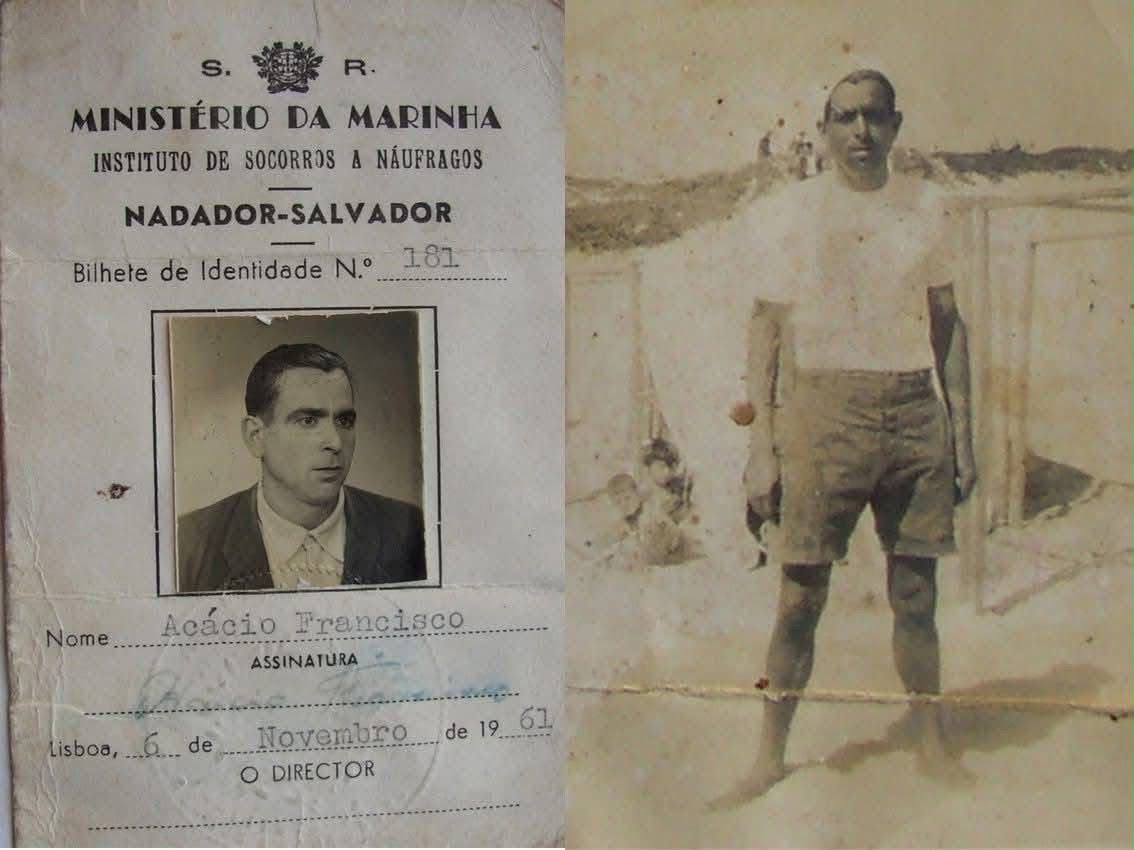
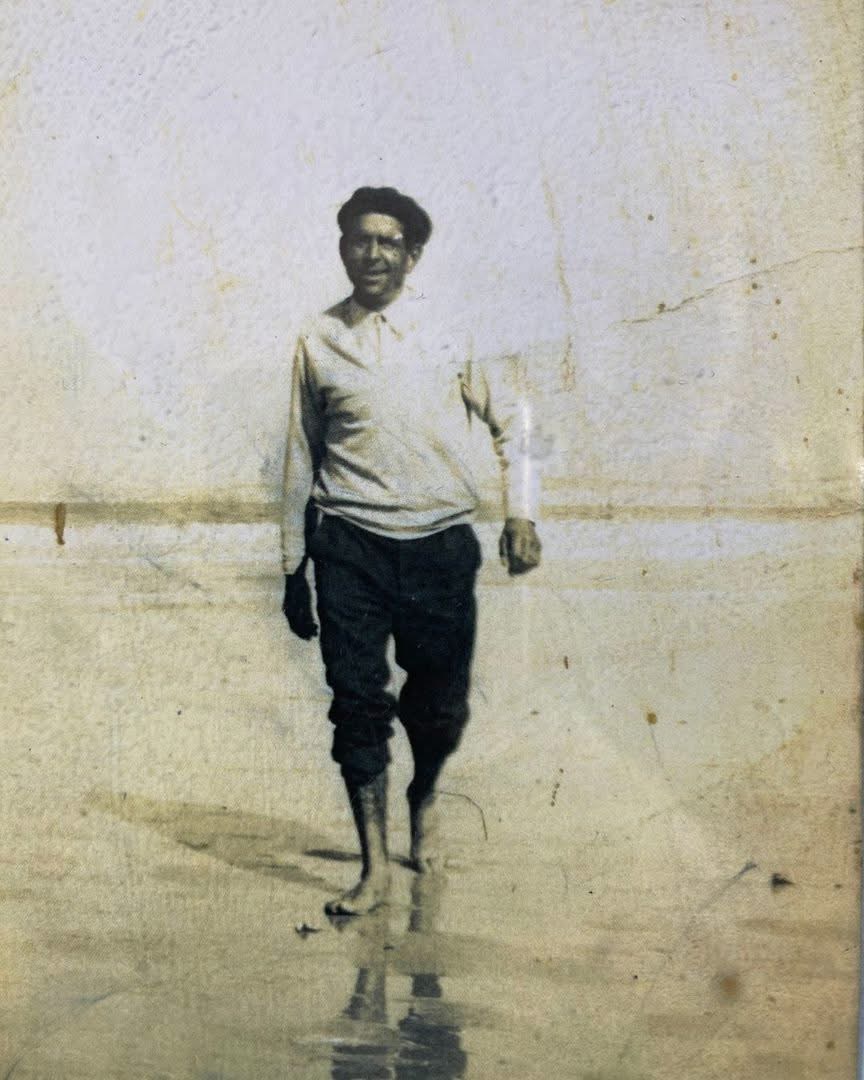
Acácio Francisco Grandela standing barefoot on wet sand in a white shirt and rolled trousers, in a cracked and faded photograph.
Acácio Francisco Grandela, on the sand at Peniche.
A 1961 lifeguard identity card issued to Acácio Francisco, beside a photograph of him standing on the beach.
The card itself, kept since the year it was issued.

My great-grandfather was called Acácio Francisco Grandela. He fished, and on the sixth of November 1961 the Ministério da Marinha issued him a card — nadador-salvador, number 181 — which made him the first lifeguard in Peniche.

Before that card, if the sea took you, it took you. He taught his son to read water the way he read it: where it moves, where it holds, and where it will not let you back out. My grandfather carries the same name.

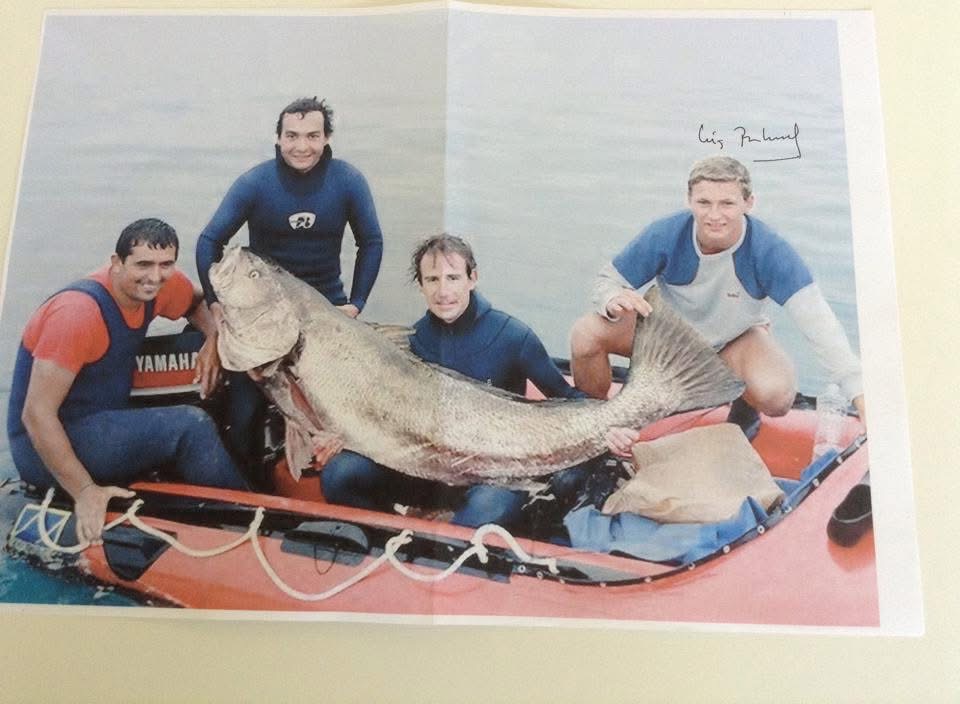
Four men in wetsuits on an orange inflatable boat holding a corvina almost as long as they are tall.
My grandfather and his friends. The corvina is nearly as long as the men holding it.

My grandfather still fishes. So does my uncle. They go out to the Berlengas — a nature reserve nine miles off this coast — and come back with whatever the rocks out there are willing to give up.

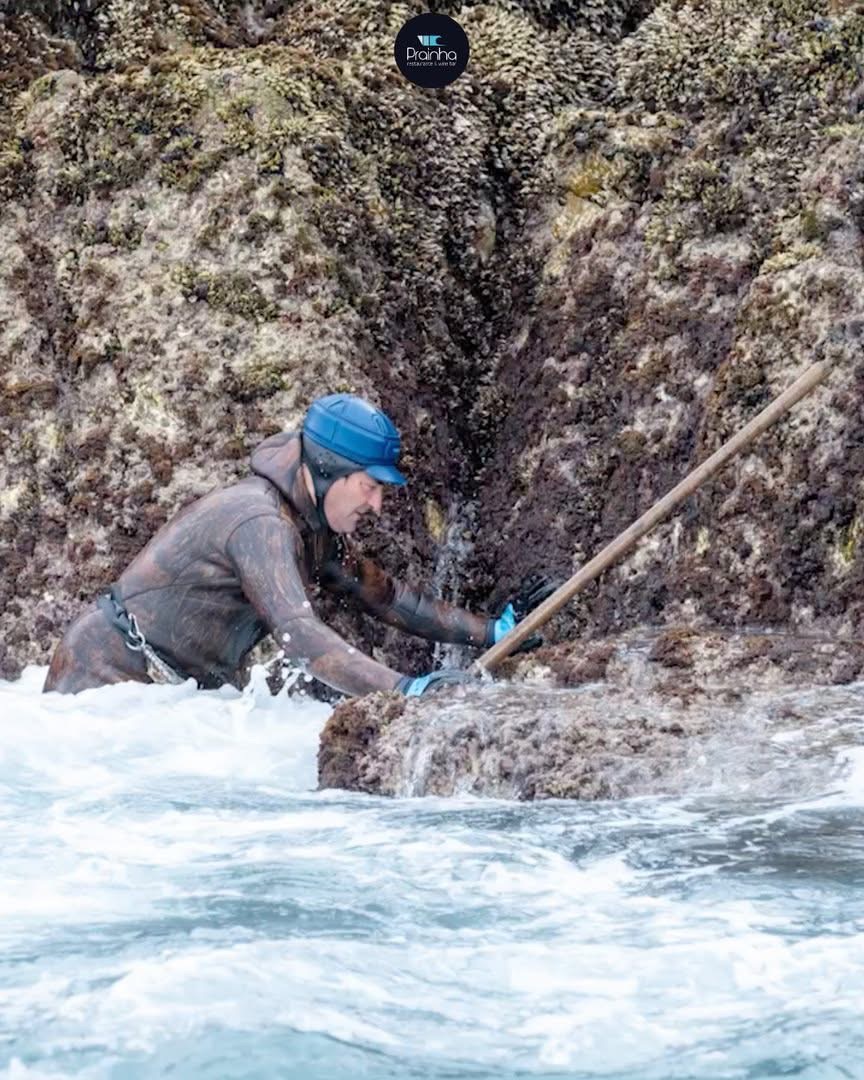
Mostly that means percebes. Goose barnacles grow where the swell hits hardest, and the only way to take them is to go in between waves with a blade and be out before the next one arrives. My uncle broke his leg doing it, thrown against the rock. He went back.

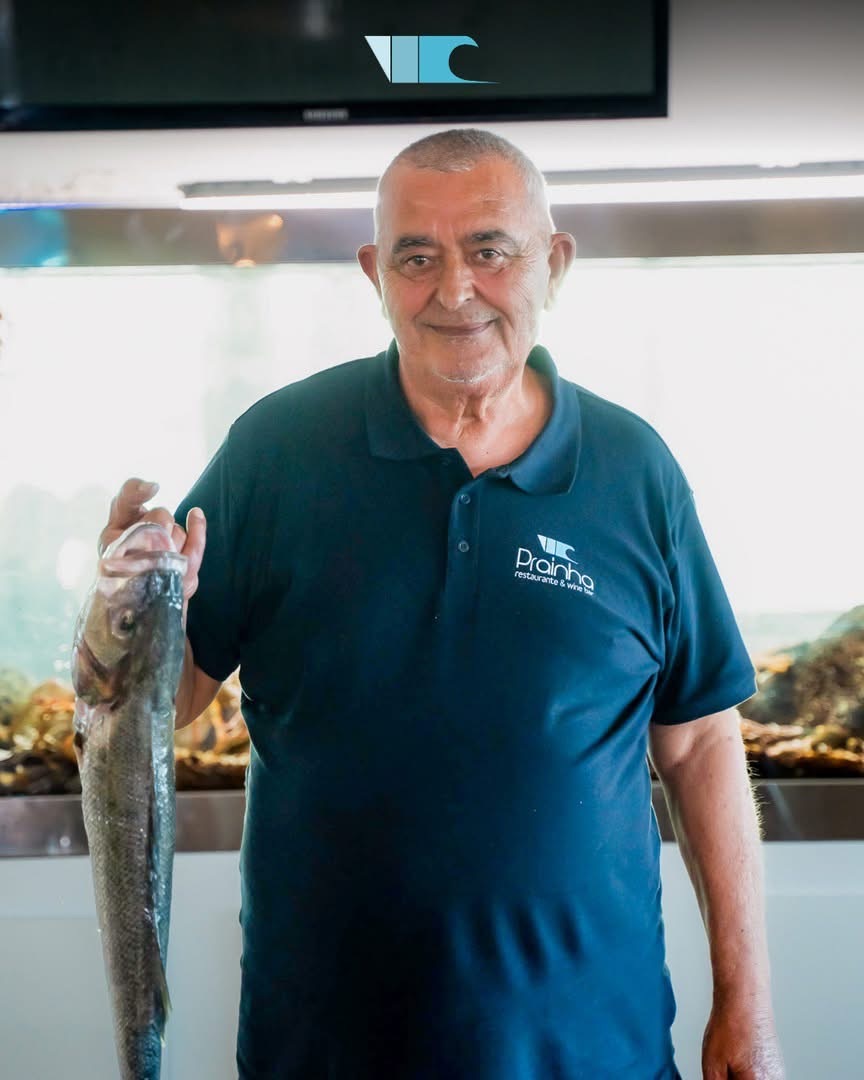
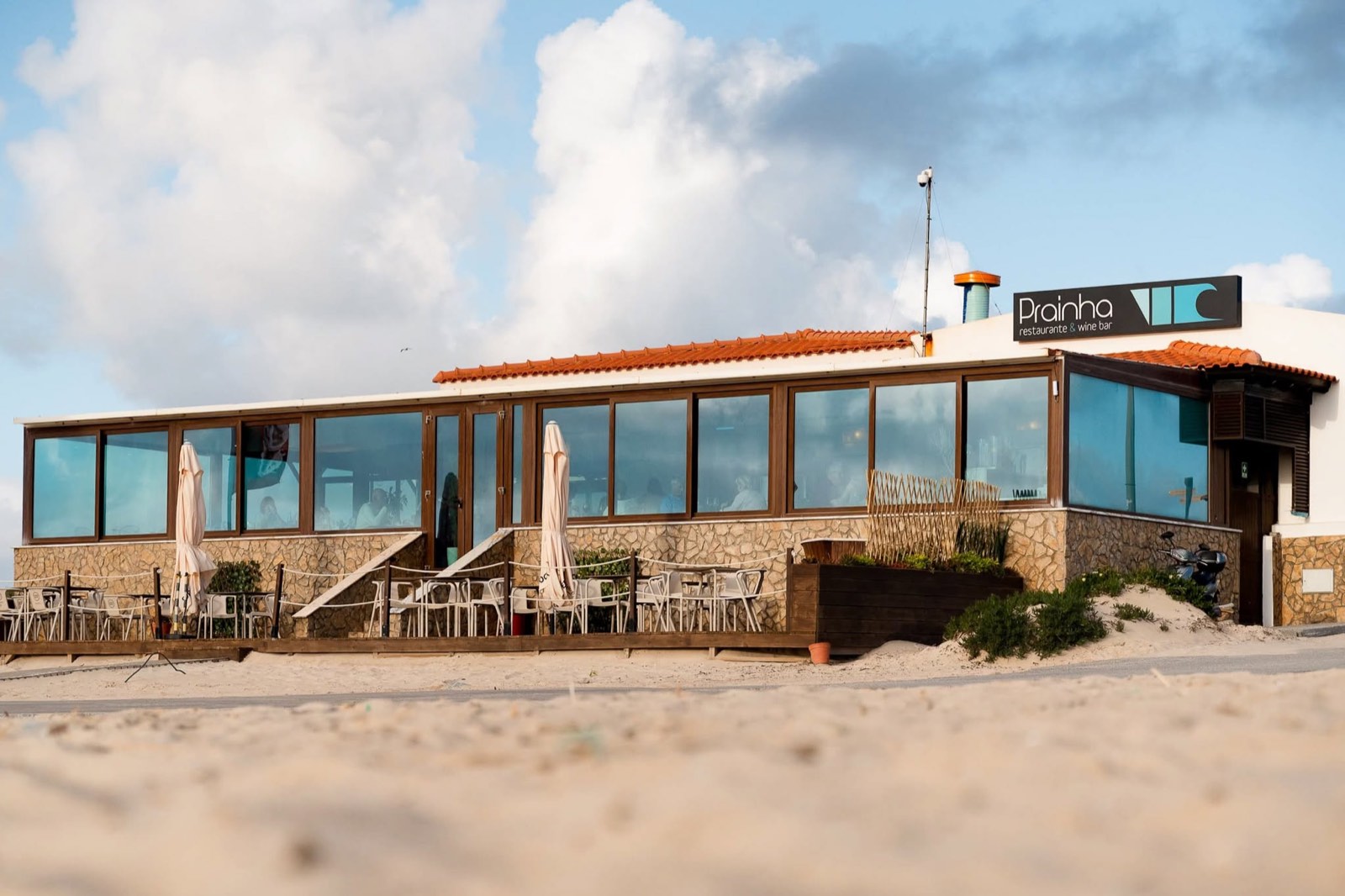
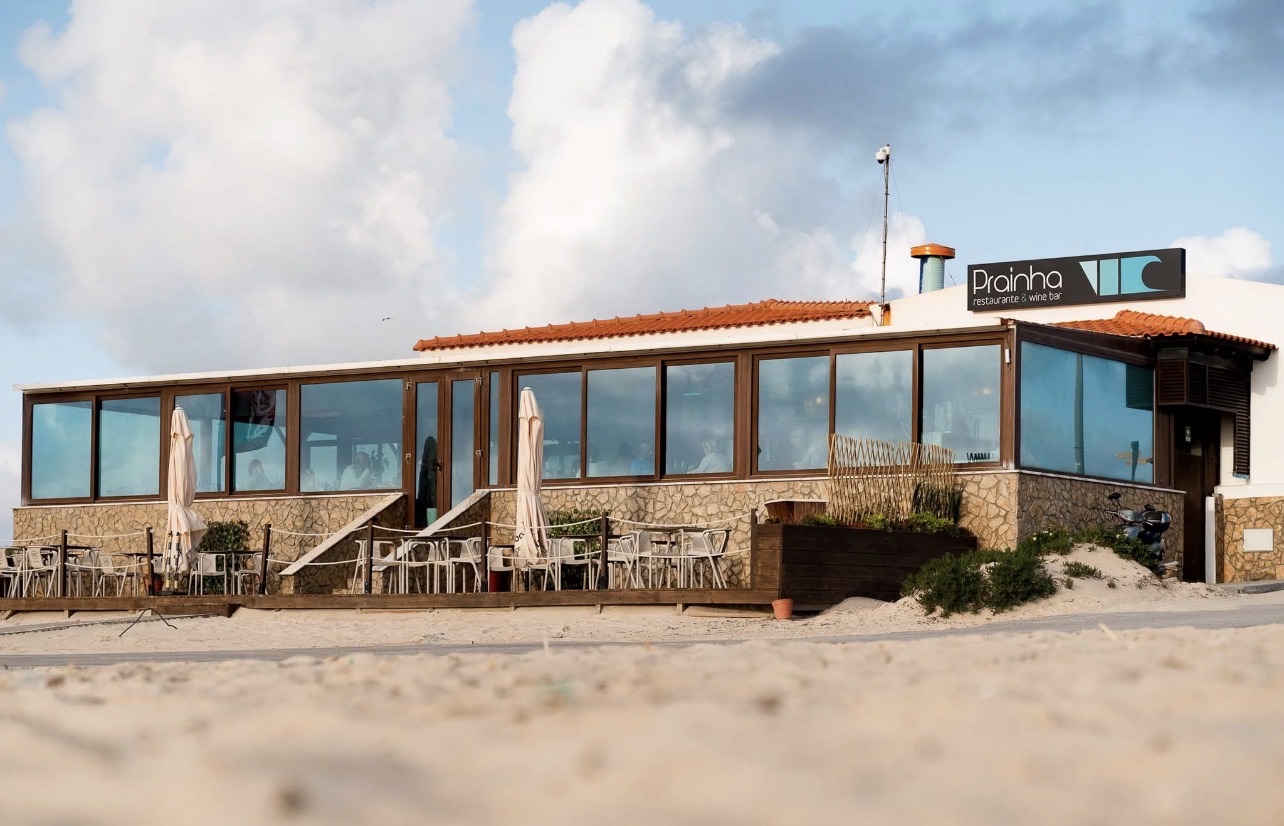
The Prainha restaurant, a low white building with a terracotta roof and glass frontage, sitting directly on the sand.
Prainha. The restaurant takes its name from the beach in front of it.
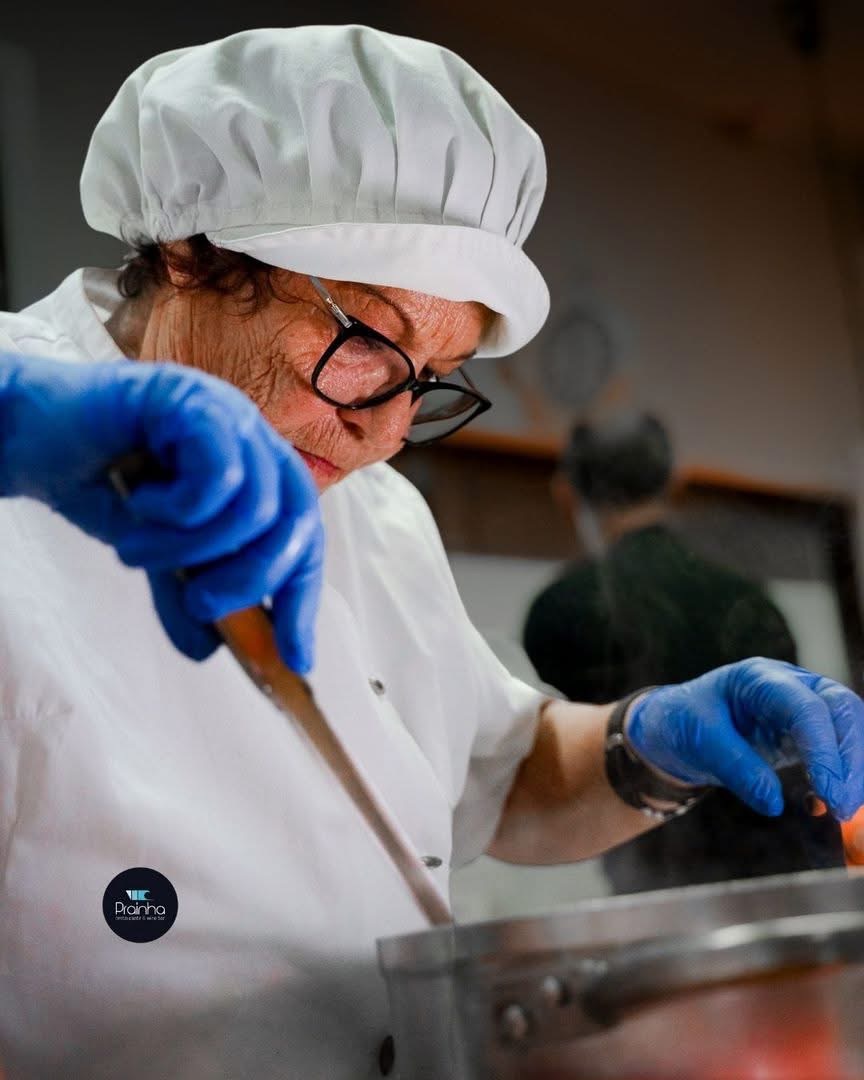
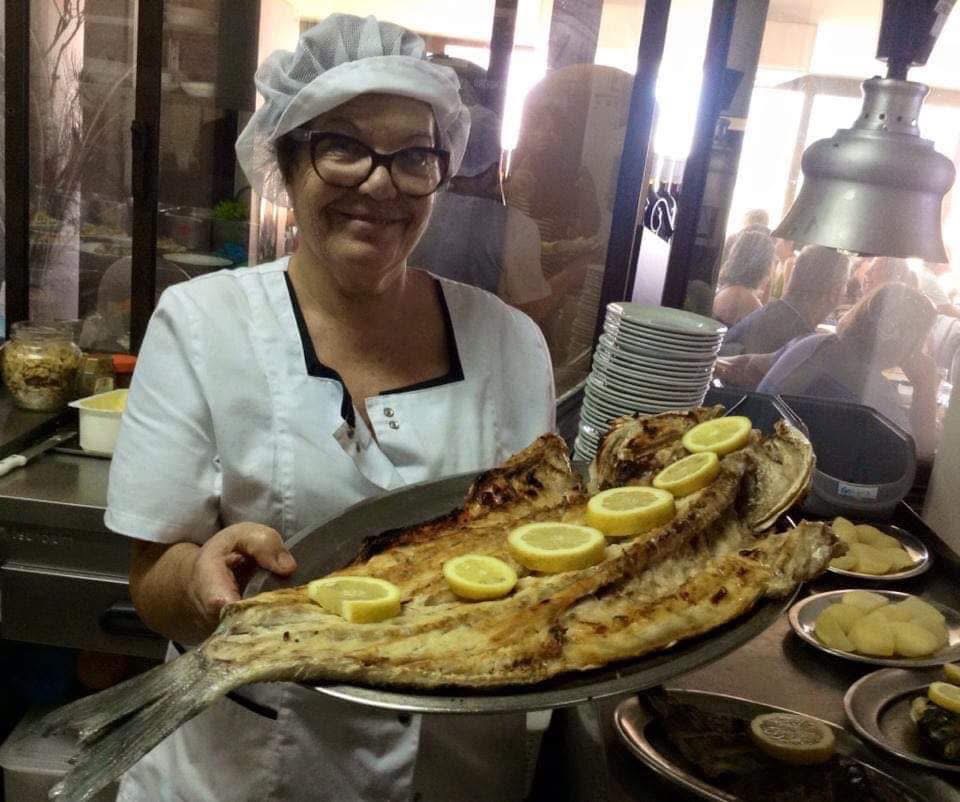
My grandmother in chef whites and a hairnet, smiling, carrying a large platter of grilled fish with lemon.
My grandmother has been the chef here for as long as I have been alive.

The restaurant is called Prainha. So is the wave in front of it — the small beach on the sheltered side, where very nearly everyone in this family caught their first one. The beach had the name first. We only cook under it.

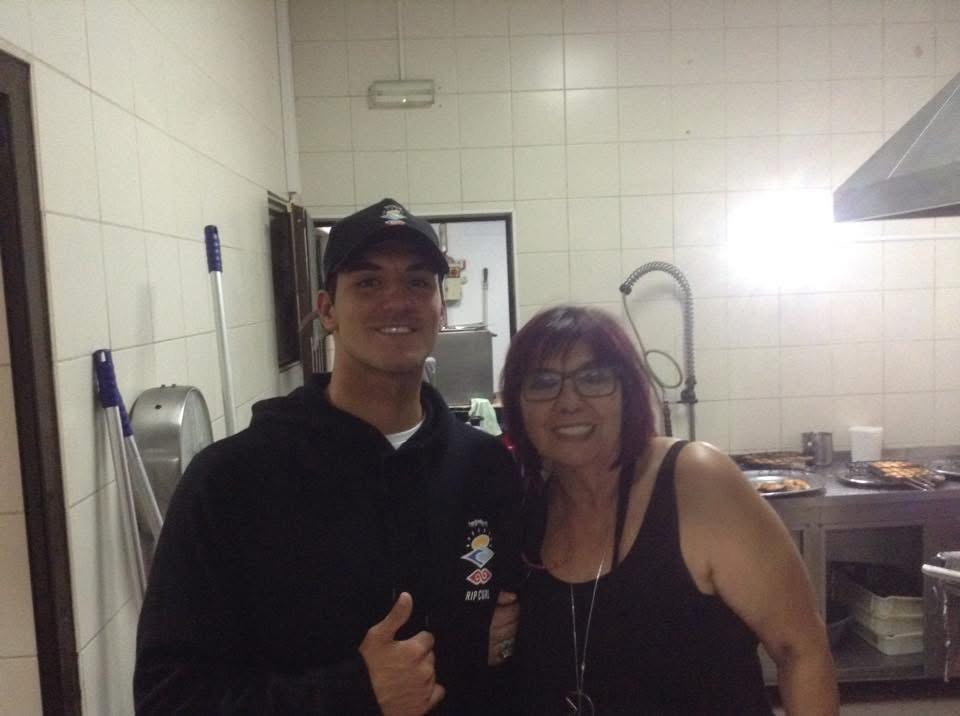
What comes out of that kitchen came off the boats that morning. For years Rip Curl held their Peniche party here, and world champions came through the kitchen door like everyone else, because that is where the food was.

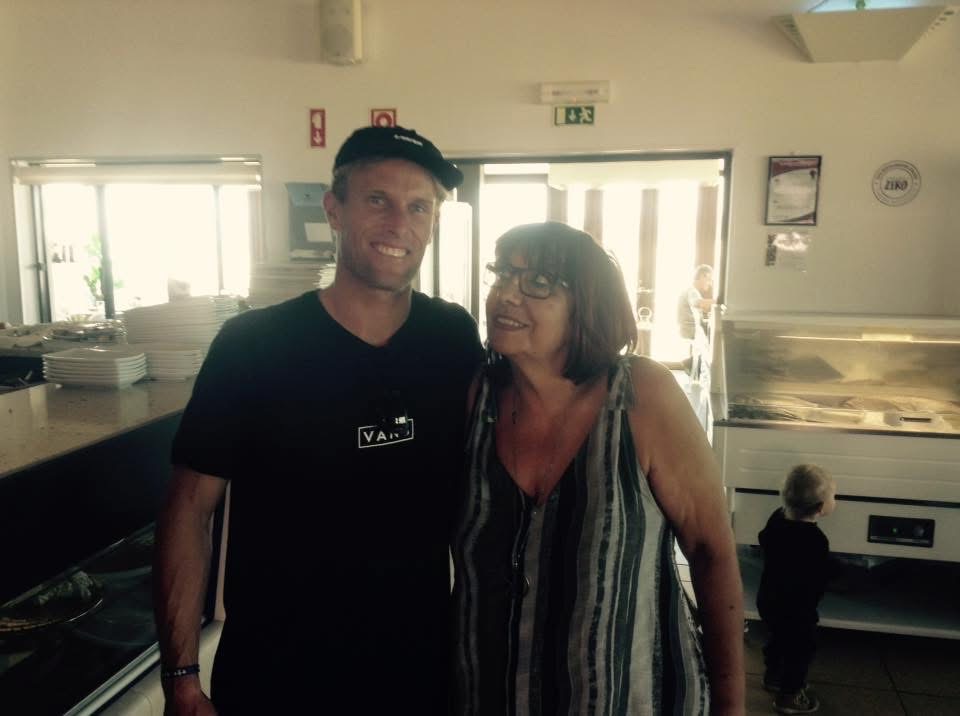
Gabriel Medina in a Rip Curl hoodie standing beside my aunt in the restaurant kitchen.
Gabriel Medina, in the kitchen, with my aunt.
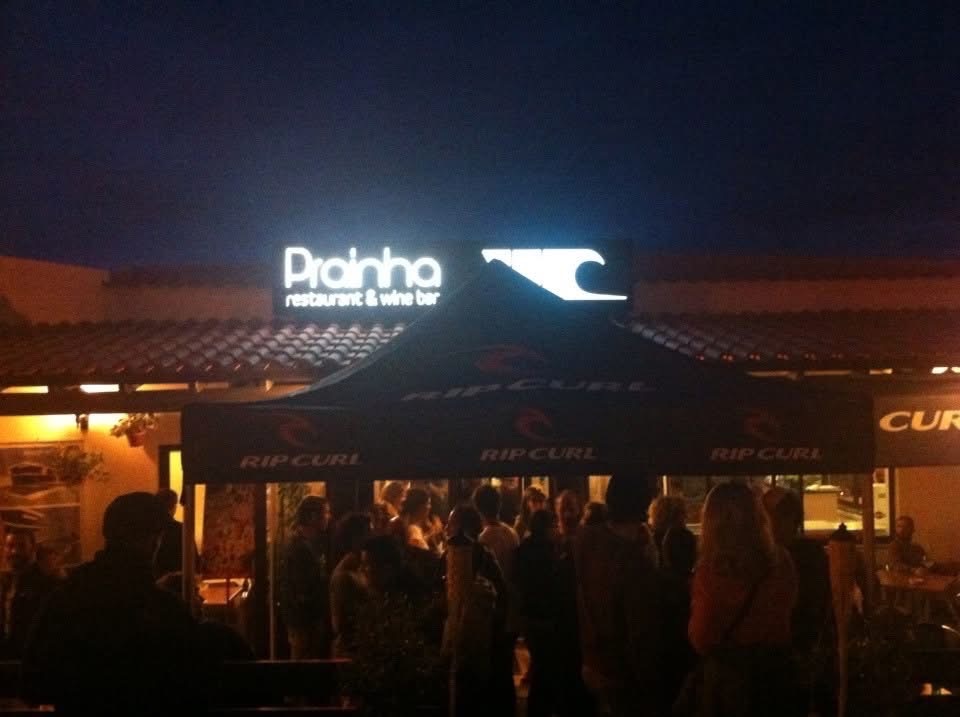
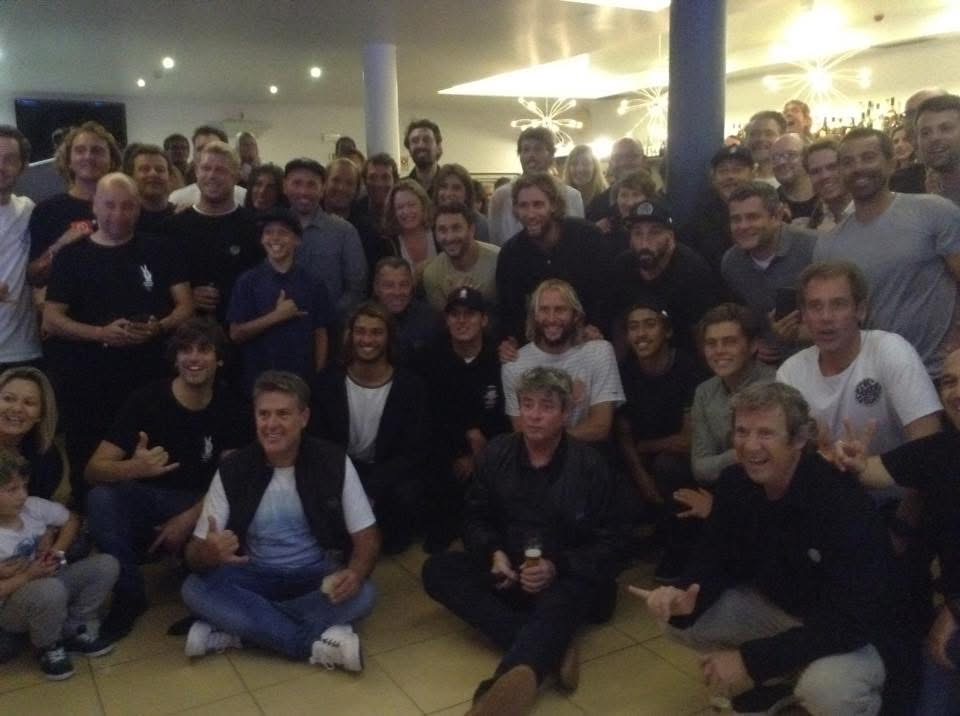
A crowd of surfers and locals packed under Rip Curl tents at night outside the restaurant.
The Rip Curl party at Prainha, 2014.
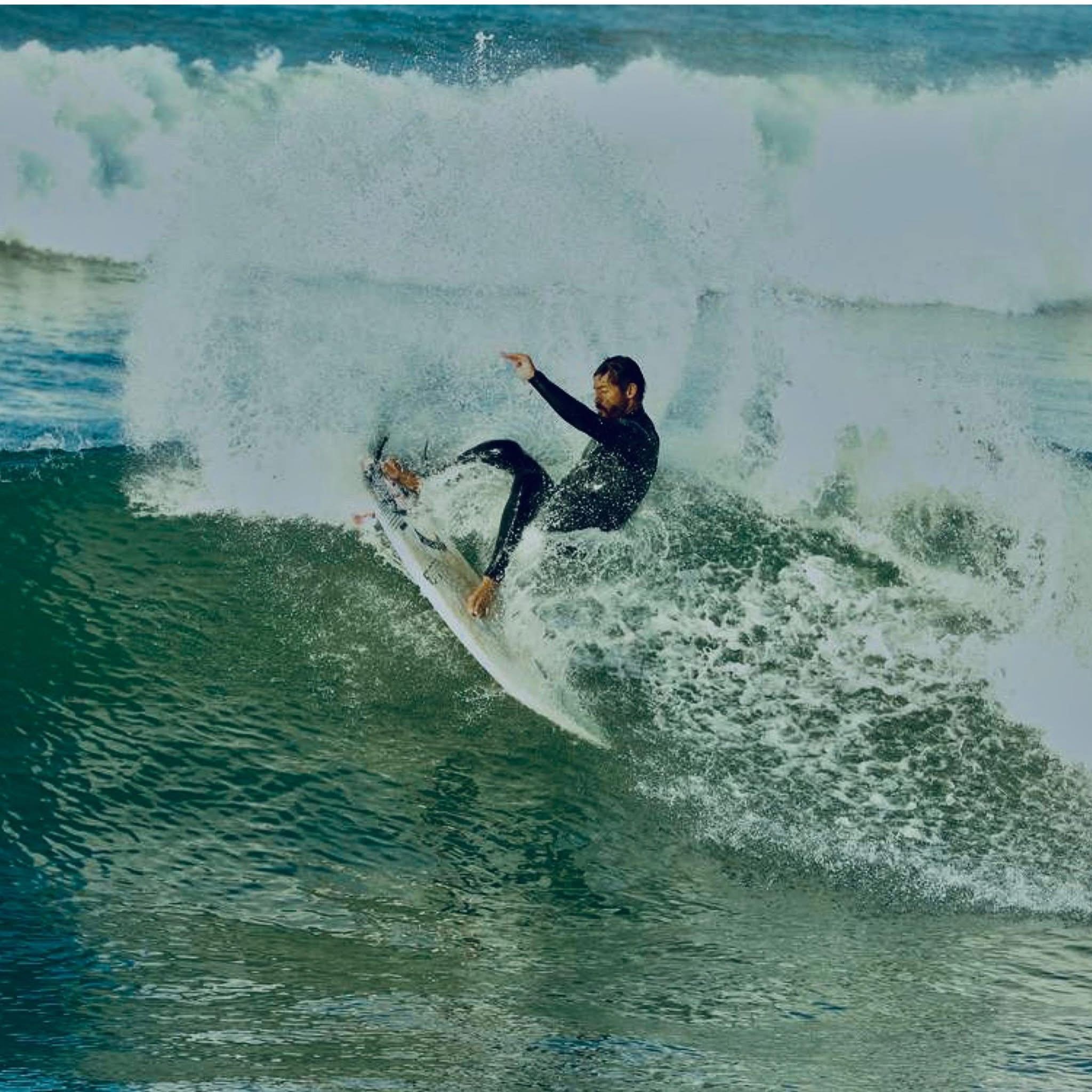
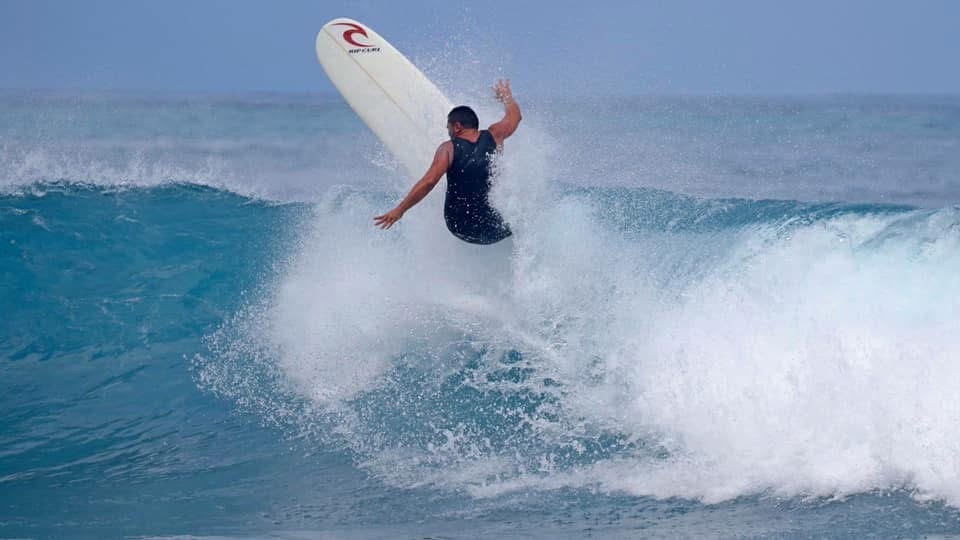
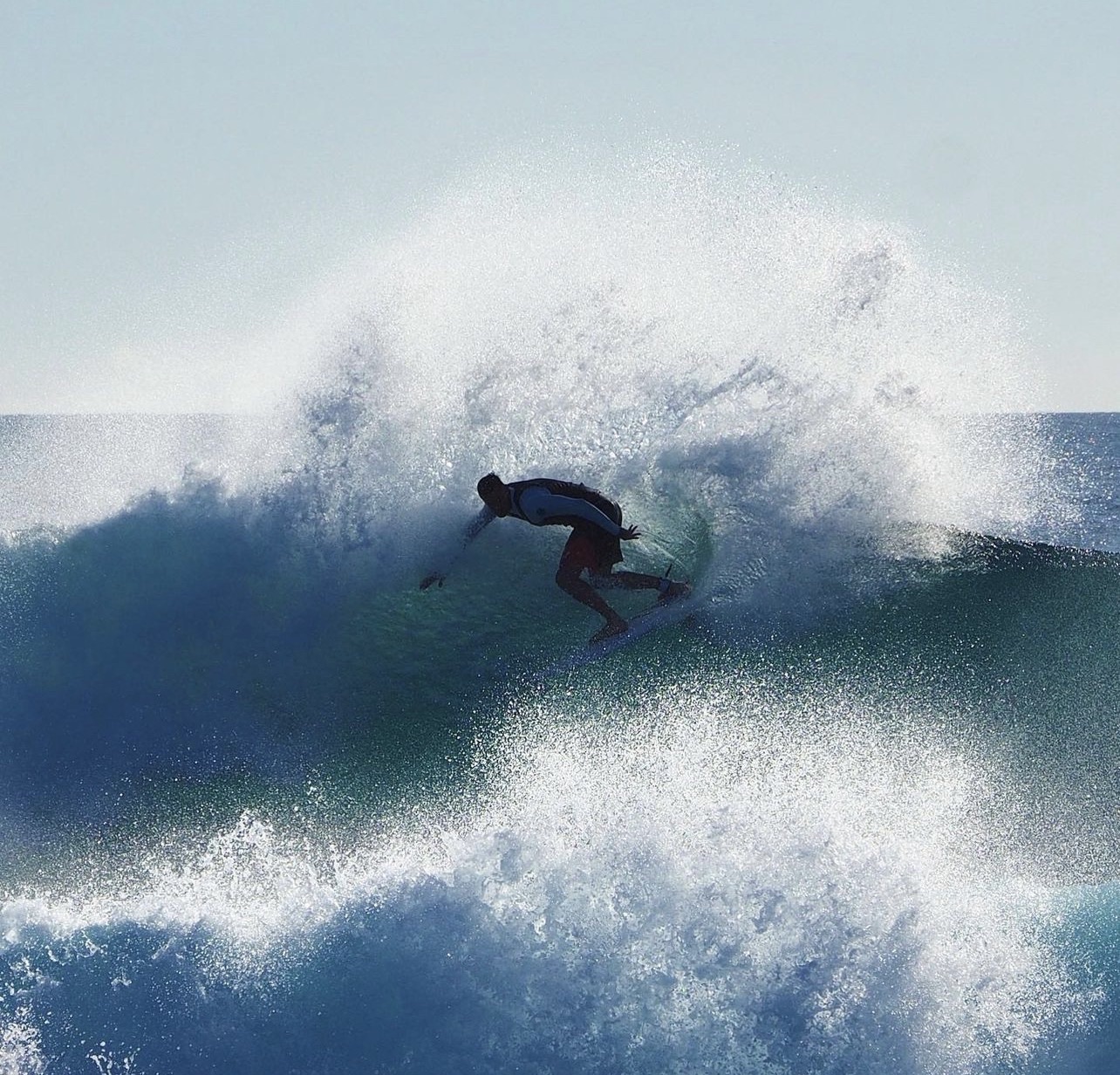
My father surfing backside, throwing a wide fan of spray off the top of a dark blue wave.
My father, Hugo Grandela, backside.
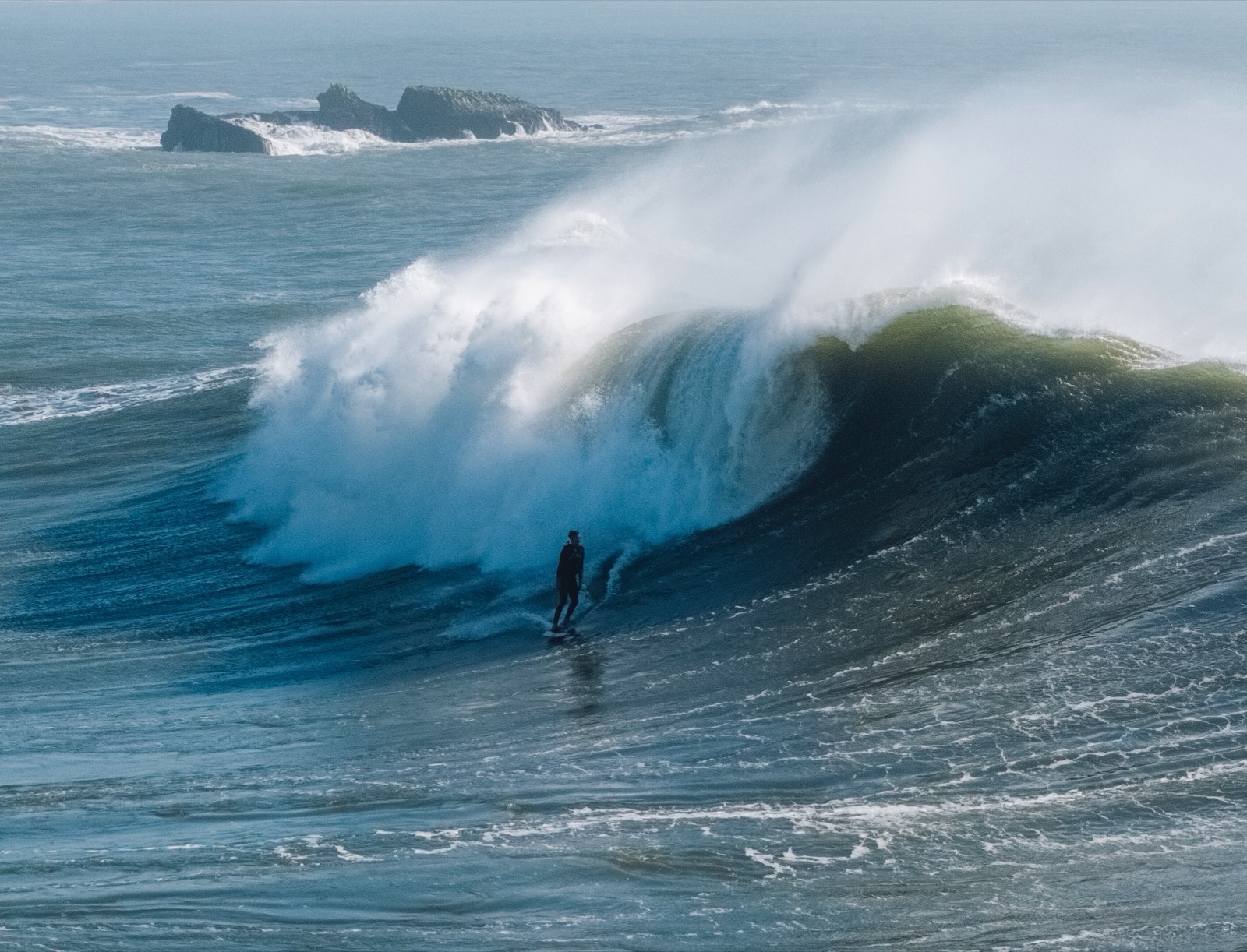
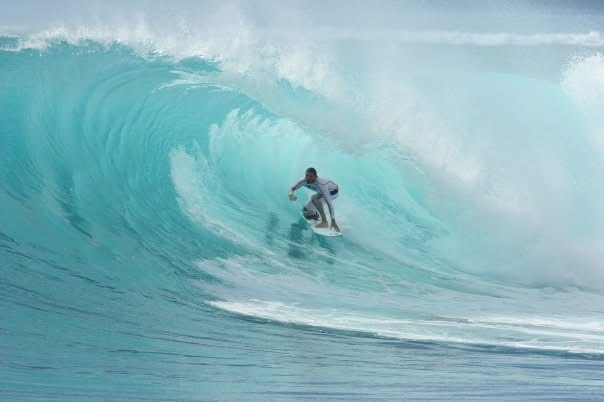
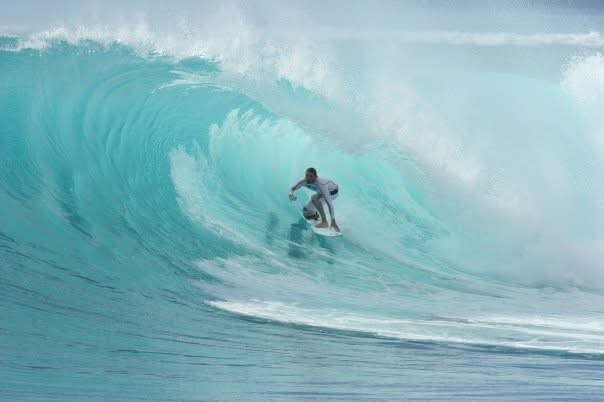
A surfer deep inside a large turquoise barrel, the lip throwing over his head.
My uncle, somewhere in the Mentawais.

My uncle Bruno Grandela is a multiple-time Portuguese national longboard champion, and probably the most respected longboarder in the country. My father, Hugo, is the reason I surf at all — he had me standing on a board at three.

Four generations in, the sea has gone from the thing that fed this family to the thing that brings people to it. It is the same water. We just do something else in it now.

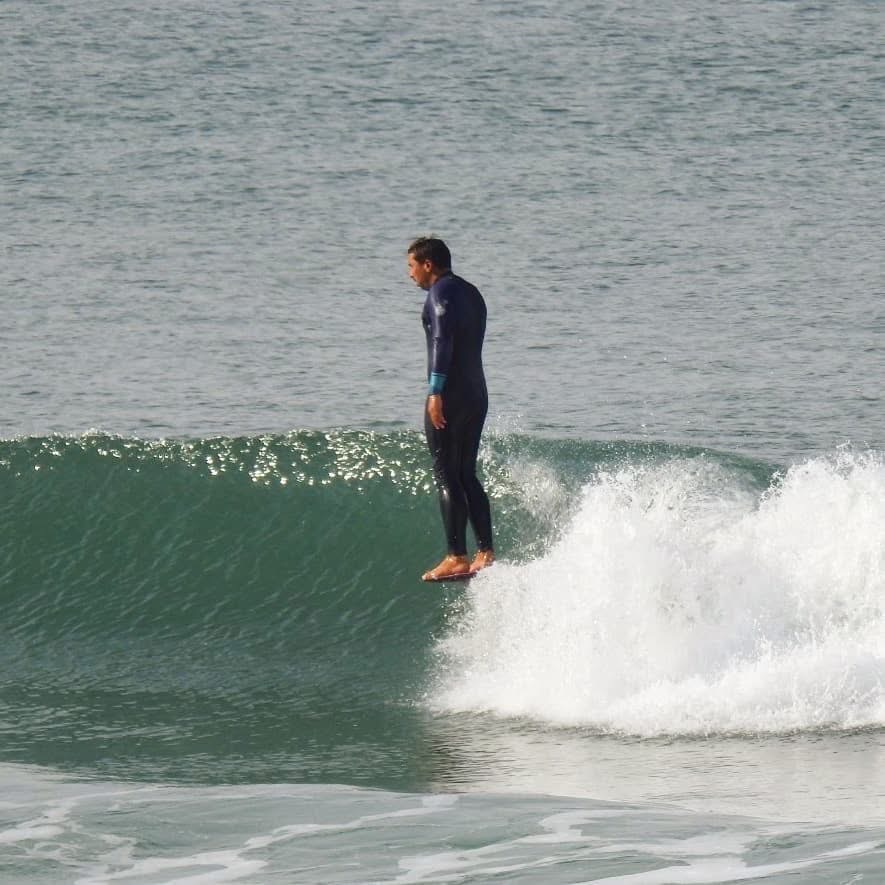
Bruno Grandela riding a longboard with both feet on the nose, on a clean green wall of water.
Bruno Grandela, hanging ten.
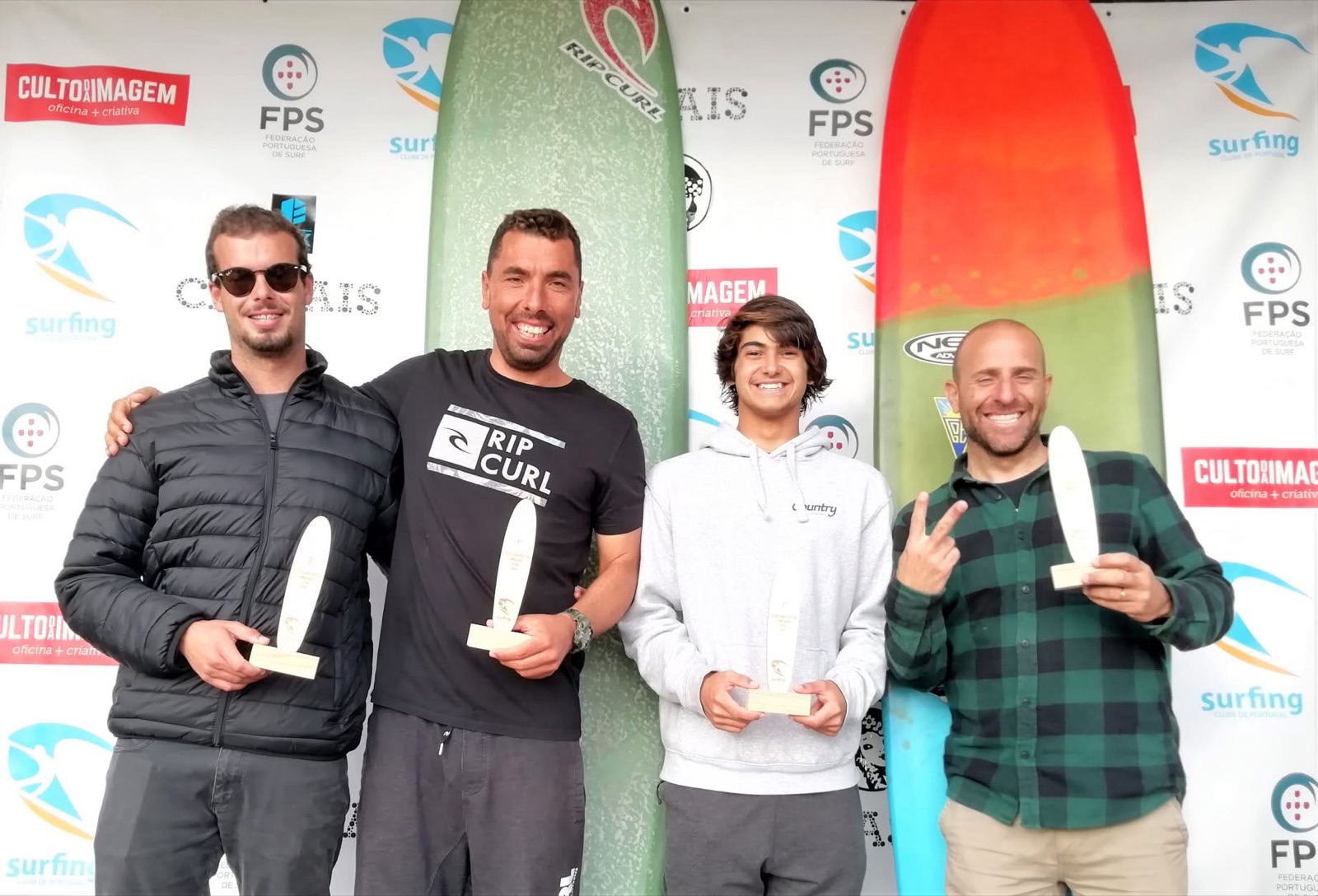
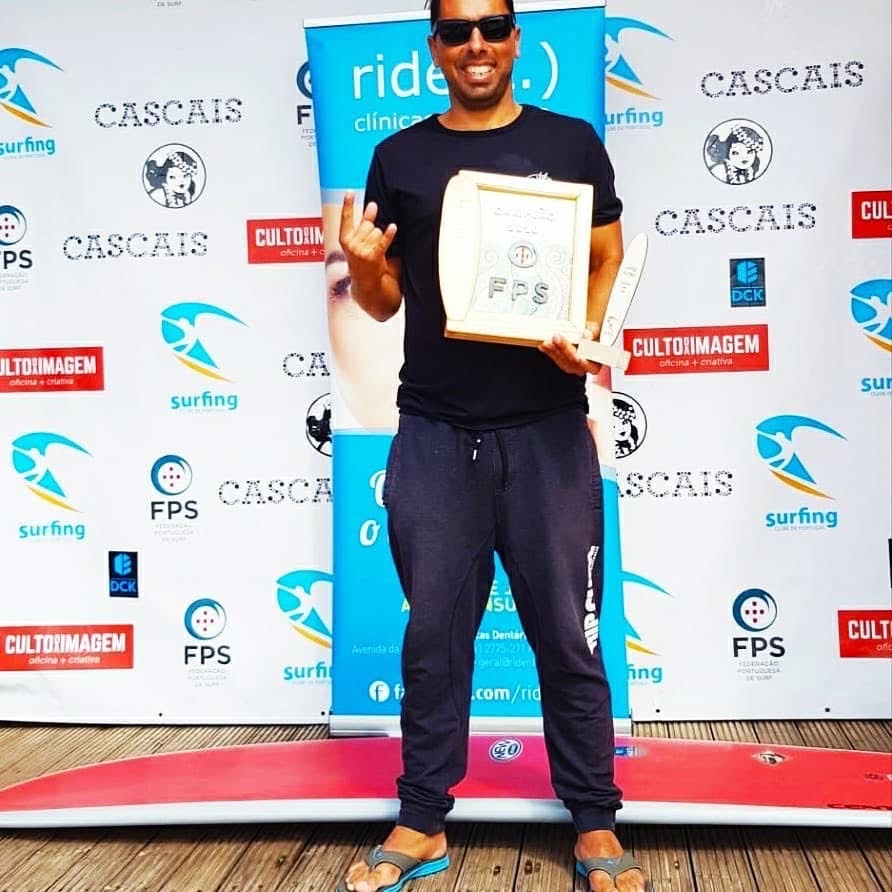
Bruno Grandela in a Peniche Surfing Clube jersey holding a glass longboard trophy on the beach.
Circuito Nacional de Longboard, Peniche, September 2019.
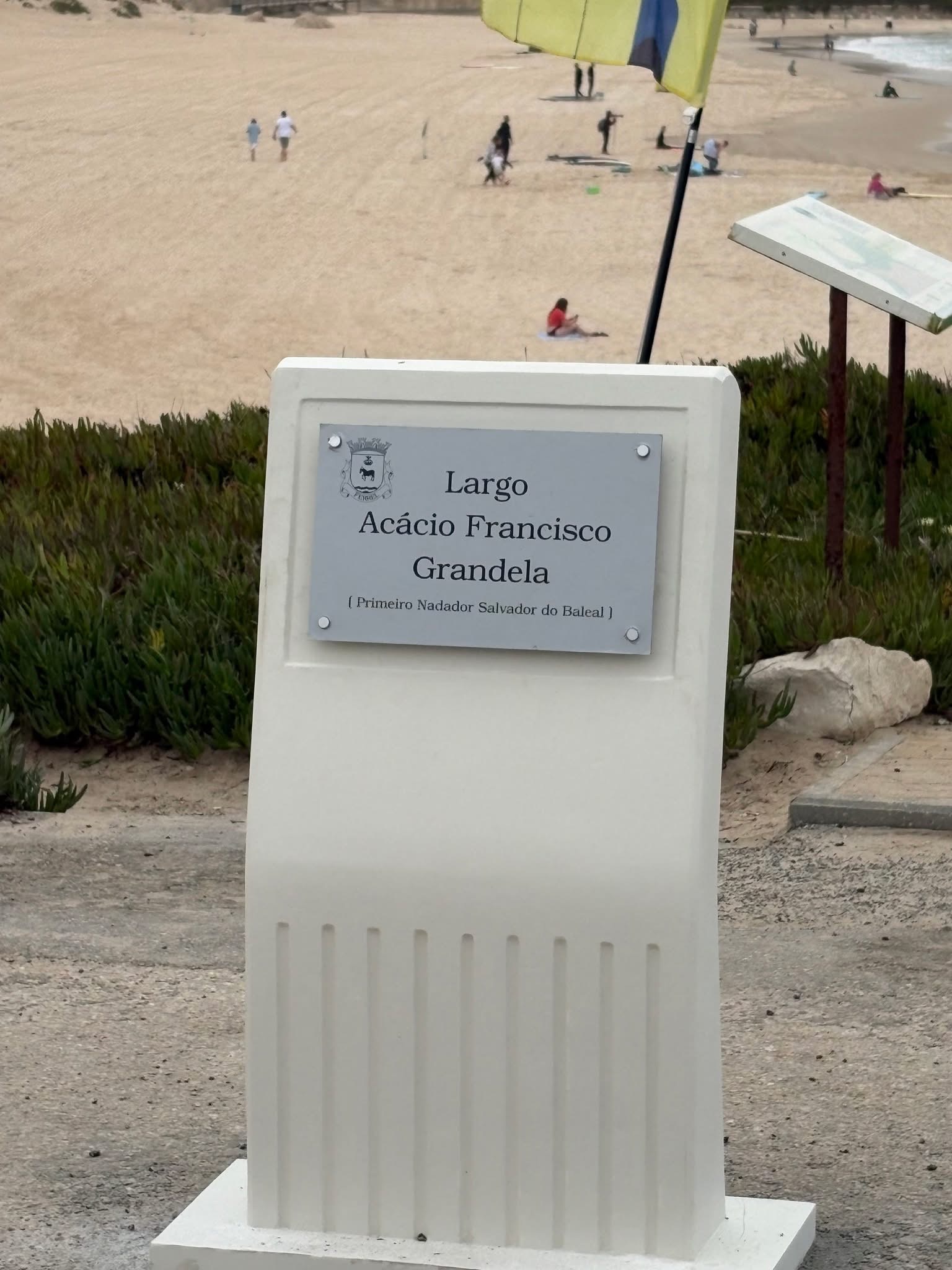
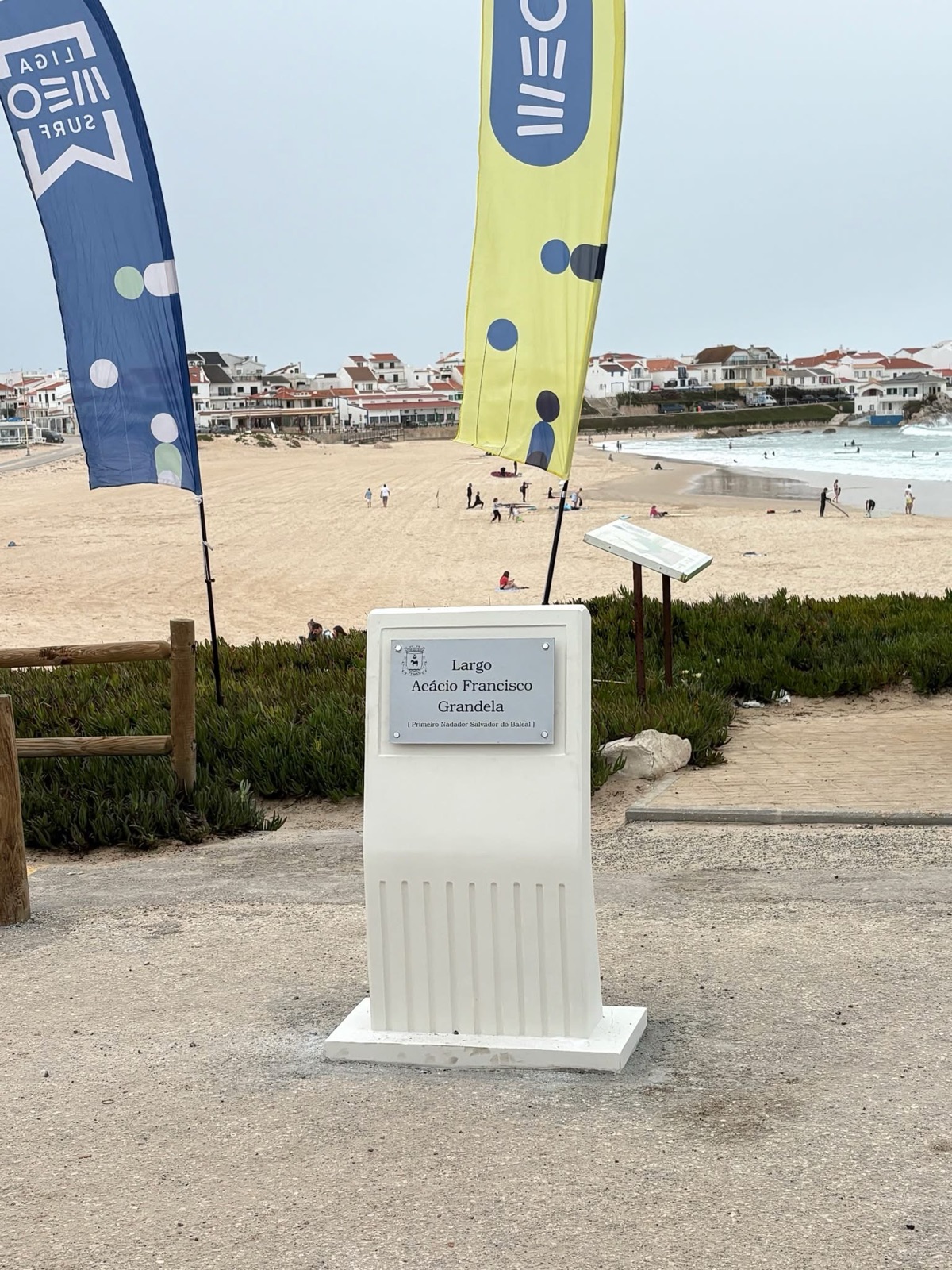
A white stone marker at the entrance to Lagide beach carrying a plaque reading Largo Acácio Francisco Grandela.
The square at the entrance to Lagide. The plaque reads primeiro nadador salvador do Baleal. There is a Rua Acácio Grandela on the island, too.

Four generations
of the same sea.

The three of us.

A small team on purpose. These are the people who will actually be in the water with you, and between them they have spent most of their lives on this one stretch of coast.

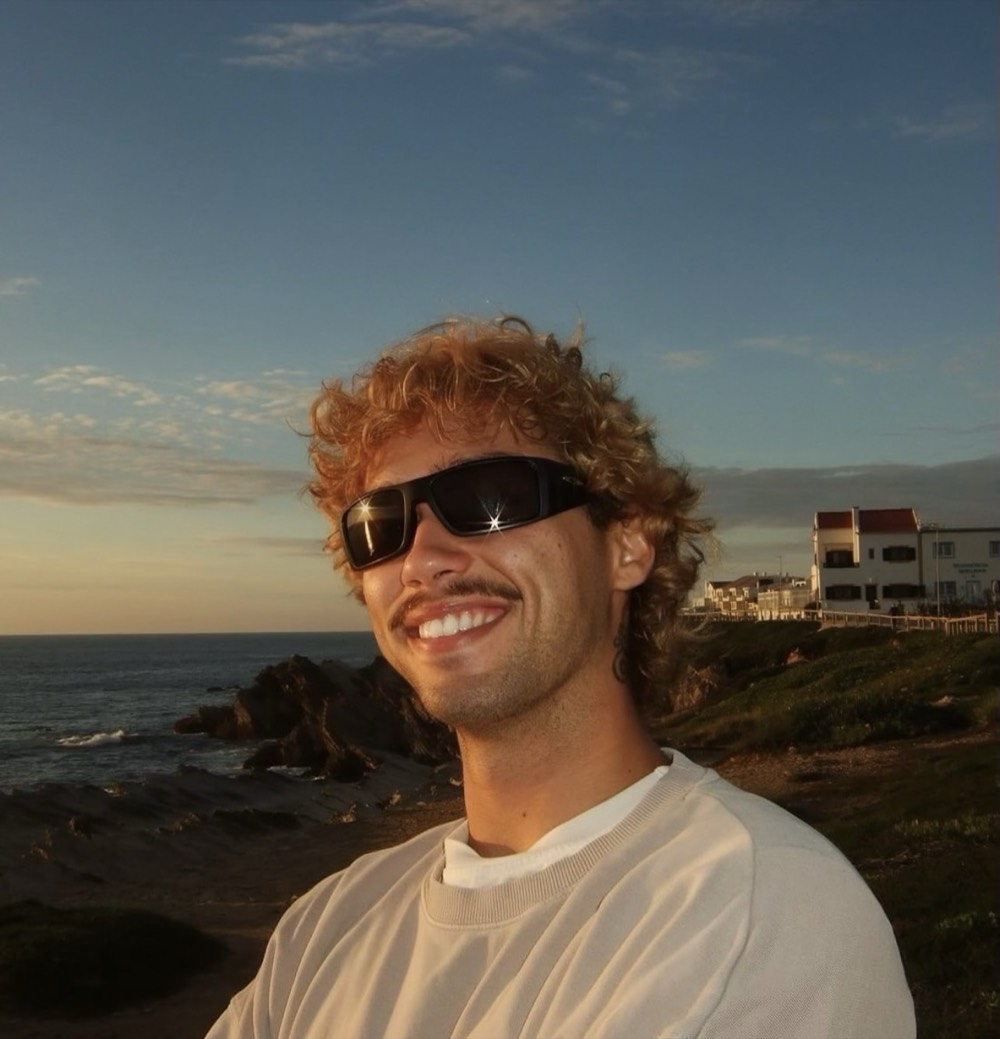
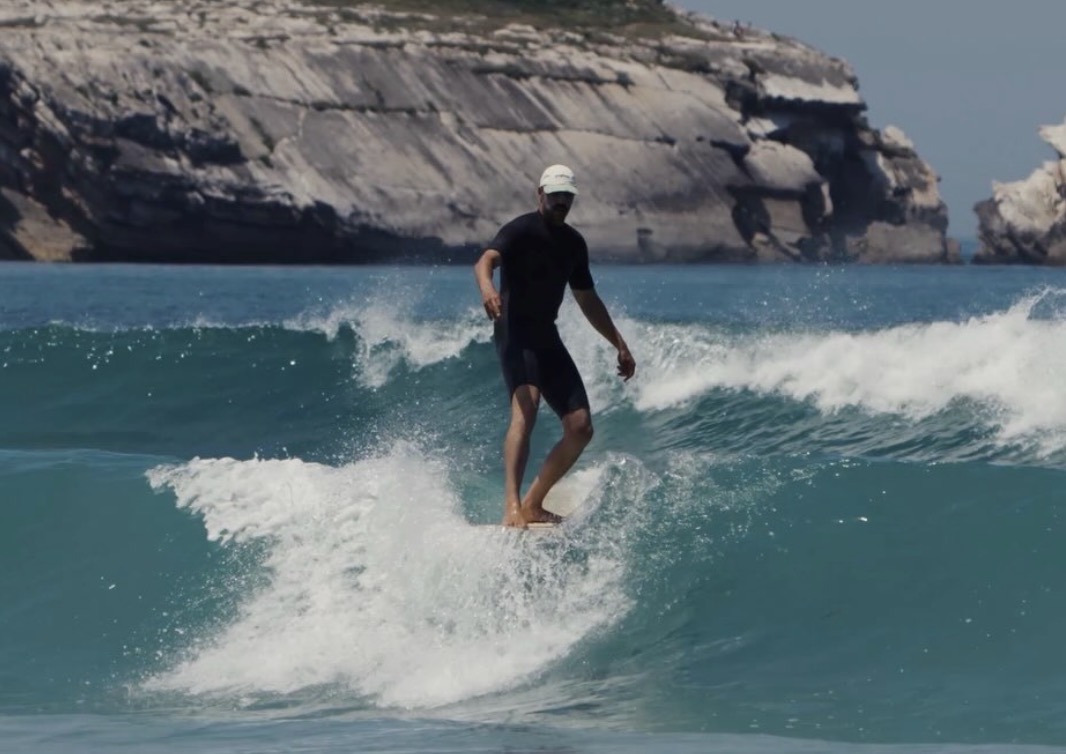
Lourenço riding a large wave, a small figure at the bottom of a tall wall of water. Lourenço Grandela smiling on the cliffs at sunset, the sea behind him.

Lourenço Grandela

Surf instructor & guide

“The first day is not about standing up. It is about not being afraid of the water — everything else comes after that.”

Languages
Portuguese, English, Spanish
In the water
Surfing since I was three. Teaching for six years. Nazaré and Supertubos when it is on.
Qualifications
Surf instructor. Lifesaving and first aid.
Full bio

I grew up between Nazaré and Baleal — two of the most beautiful beaches in Portugal, and about as different from each other as two beaches can be. My father put me on a board at three, so I do not really remember learning.

My mother is an international surf judge, which means I got the sport from both sides: how a wave feels, and how it is scored. My great-grandfather spent his life pulling people out of this water. I spend mine taking them into it.

André walking the deck of a longboard on a clean blue wave, the Baleal cliffs behind him. André sitting on the dunes in a wetsuit with three boards laid out beside him. André shaping a surfboard blank in a shaping bay, more blanks stacked behind him.

André “Bau-Bau”

Surf instructor

“I have surfed this beach in every mood it has. There is almost always something to ride — you just have to know where to stand.”

Languages
Portuguese, English, Spanish
In the water
More years surfing than he will admit to, and nearly as many teaching.
Also
Shapes his own boards.
Full bio

I am from Setúbal, but I have lived in Baleal most of my life — long enough that people assume I was born here. I know this stretch of coast the way you know a road you have driven a thousand times.

I shape as well as ride, and that changes how you teach. You stop only watching what someone’s feet are doing wrong and start seeing what the board is doing wrong underneath them. Half the time the fix is the board.

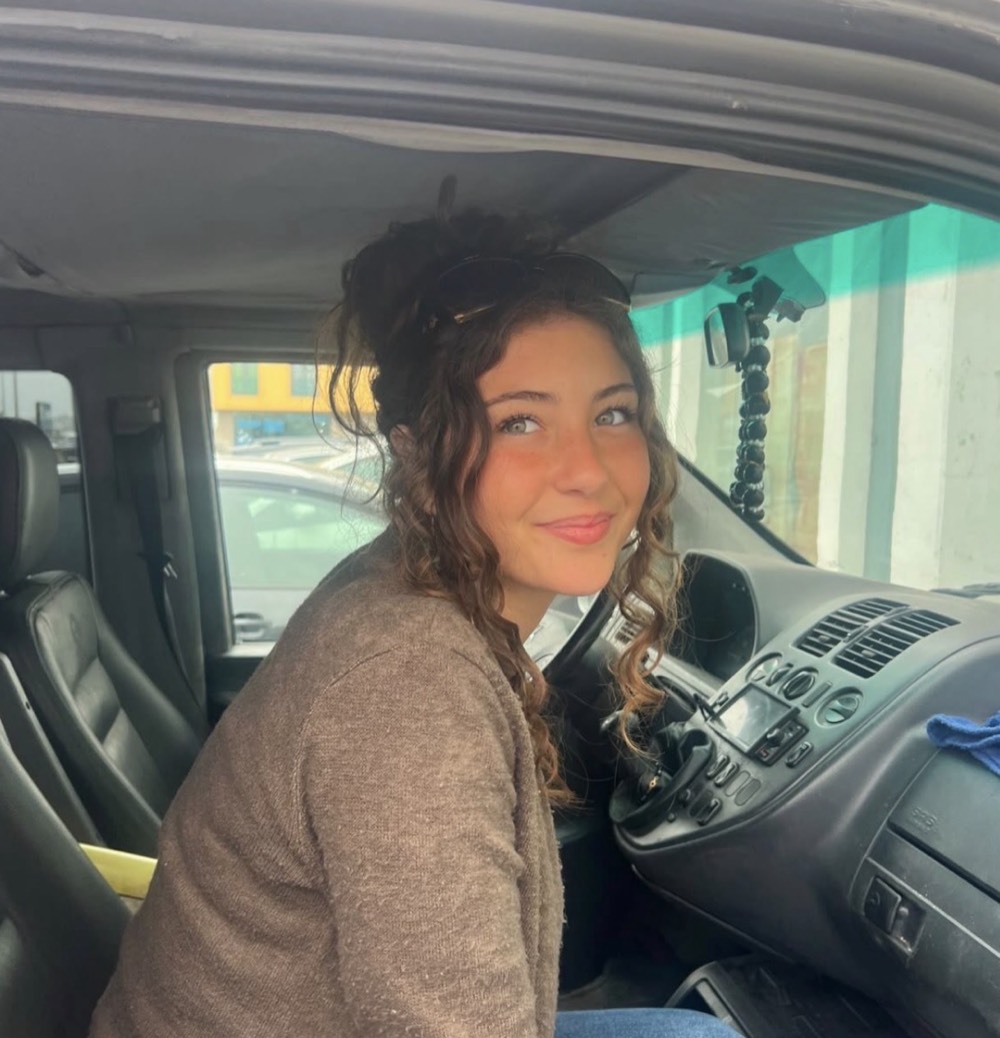
Carolina Caiado sitting in the driver’s seat of the club van, turning towards the camera.

Carolina Caiado

Photography & social media

“I grew up looking at this beach. Now I photograph it, and try to give people back the part they missed while they were surfing.”

Languages
Portuguese, English, Spanish
Shoots
Drone and camera — from the air, the sand and the water.
Also
Draws and paints. It is where the framing comes from.
Full bio

I have lived in Baleal my whole life, so I know what the light does here at every hour of the year, and which corner of which beach is worth pointing a camera at in January.

When I am not shooting I am drawing or painting. I think that is why I frame things the way I do — I am looking for a picture before I am looking for a photograph.

The spots of Baleal

Every one of these is inside fifteen minutes of the door. This is the short version — where each breaks, who it suits, and what it will ask of you before it gives you anything.

Baleal from the air: the rocky headland and its white village joined to the mainland by a wide sand bar, with open ocean breaking on one side and calm water on the other.
Baleal from above. The headland, the sand bar that ties it to the shore, and the two coasts facing opposite ways — which is the whole reason one side is nearly always surfable. The Berlengas are on the horizon.
  1. Lagide Reef break · left, with a secondary right Baleal
    Level
    Intermediate–Advanced
    Bottom
    Rock/reef, mostly flat rock
    Best swell
    N–NW
    Tide
    Half-tide rising; works most tides
    Offshore wind
    S / E
    Faces
    NW (320°)

    Flat-rock reef with a committing paddle-out and a heavy, established local crowd. Learn the entry and exit before you go.

  2. Prainha Beach break · sand, sheltered Baleal
    Level
    Beginner-friendly
    Bottom
    Sand
    Power
    Varies a lot
    Longboard
    Yes
    Faces
    S (190°)
    Parking
    Car park at the beach

    Where most first lessons happen. Right next door to Lagide, and nothing like it.

  3. Cantinho da Baía Point break · very consistent Baleal
    Level
    Beginner–Advanced
    Consistency
    Very consistent
    Longboard
    Yes
    Faces
    SE (130°)
    Offshore wind
    NW
    Parking
    Car park at the beach

    The sheltered side. When the north side is blown out, this is usually where everyone ends up — see the module below.

  4. Gigi Beach break · lefts and rights Baleal
    Level
    Intermediate–Advanced
    Direction
    Both left and right
    Tide
    Mid tide
    Longboard
    Yes
    Faces
    NNW (330°)
    Parking
    Car park at the beach

    Open beach on the exposed side of Baleal — banks shift and rips form quickly on a bigger swell.

  5. Almagreira Beach break · quieter, down the coast Ferrel
    Level
    Beginner–Advanced
    Consistency
    Fairly consistent
    Longboard
    Yes
    Faces
    W (280°)
    Offshore wind
    E
    Parking
    Car park at the beach

    Where we go when Baleal is crowded. Long open beach, room to spread out.

  6. Supertubos Beach break · heavy, hollow, expert Peniche
    Level
    Advanced–Expert
    Bottom
    Sand
    Best swell
    SW–NW (W most cited)
    Tide
    Mid–High
    Offshore wind
    NE / E
    Faces
    SW (215°)

    Heavy, hollow and shallow over sand. Hold-downs are severe, the lip lands with real force and the line-up is expert. This wave injures people every season.

  7. Molhe Leste Beach break · right-hander by the breakwater Peniche
    Level
    Intermediate–Advanced
    Bottom
    Sand
    Best swell
    Big NW
    Consistency
    Needs the biggest pulses
    Faces
    S (190°)
    Longboard
    No

    Breaks hard beside the harbour breakwater and only on the biggest NW pulses. Current runs toward the wall.

  8. Consolação Left Reef into sand · fickle, hollow Peniche
    Level
    Intermediate–Advanced
    Bottom
    Reef/rock into sand
    Best swell
    SW
    Tide
    Low, falling
    Offshore wind
    NE
    Faces
    SW (235°)

    Starts on reef before running into sand — fickle, and shallow at the top of the point.

All the spots, properly

Reading the ocean

Swell, wind and tide are the three things that decide what you actually get. Move them and watch the wave change — on both sides of the peninsula at once, which is the part nobody tells you.

Set the conditions
1.8 m
12 s
W · 270°
SE · 140°
14 km/h
Mid

North-west side

Lagide · faces NW 320°

Cross-section of the wave on the north-west side

South-east side

Cantinho da Baía · faces SE 130°

Cross-section of the wave on the south-east side

This is a teaching model, not a forecast: it shows how the pieces pull against each other, not what tomorrow will do. The live readings further up the page are real, and come from Open-Meteo.

Four generations of my family have made their living from this water. We would like to show you what it feels like to be out in it.
Book a lesson